Changelog
The latest improvements and behind-the-scenes updates from the Peec AI team.
Get a bi-weekly roundup of Peec AI product updates, and improvements
May 20, 2026
Brand Insights is now live for everyone
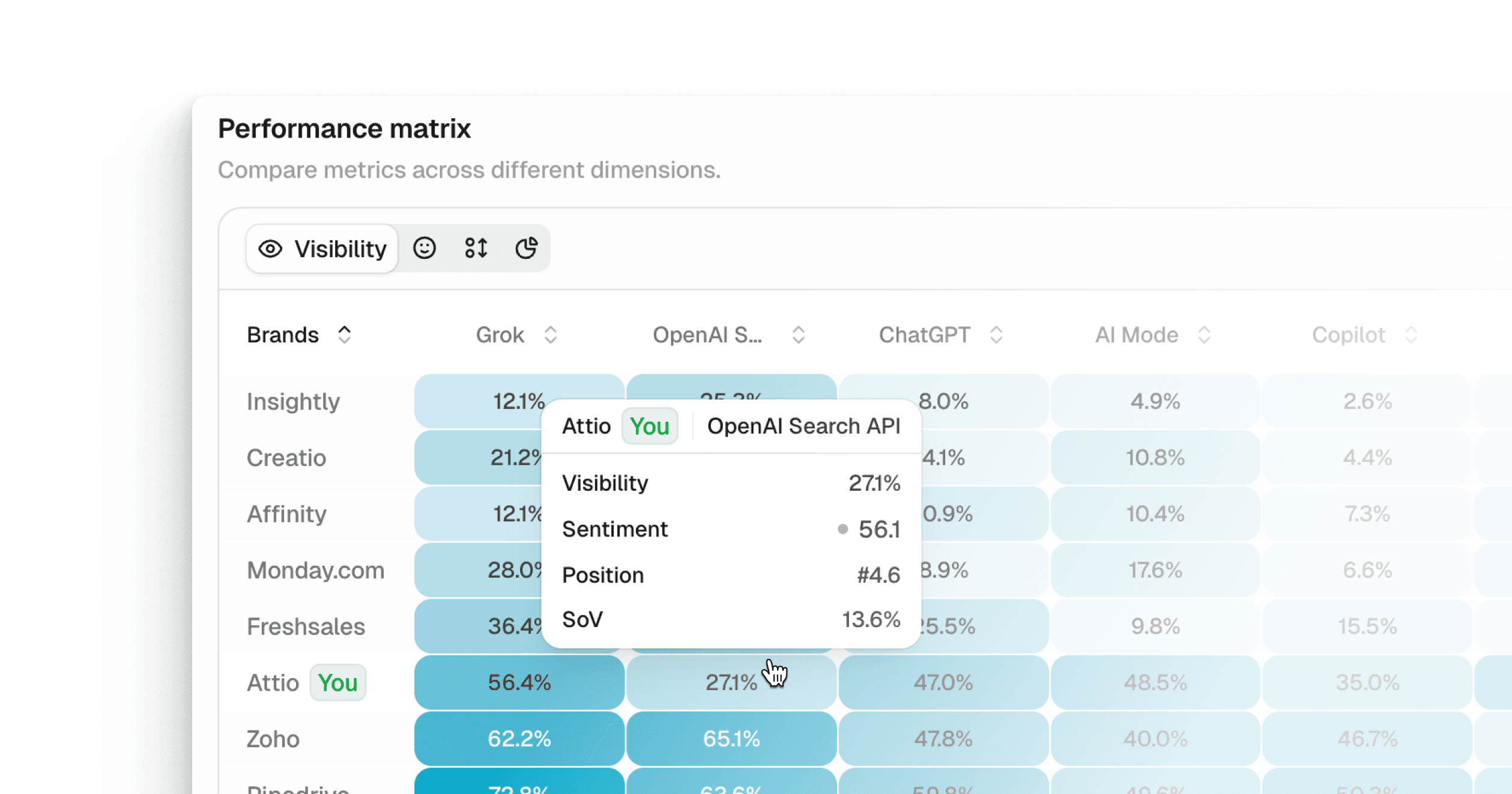
Brand Insights graduates from Early Access to everyone, in a dedicated Brand category in the nav. It gives you a per-brand deep dive on visibility, sentiment, position, and share of voice, with full time series and a heat map, so you can see how any brand moves over time and where it stands right now.
Pick any two of brands, topics, tags, or models for the x and y axes and outliers surface fast. The strongest-model and weakest-model highlights are the quickest way to decide where to focus: you can see at a glance which engine is carrying your visibility and which one is leaving it on the table.
Movers on Domains and URLs
Both the Domains and URLs pages now open with a bar chart split into Top, Trending, Losing, and New tabs, so you can see which sources are gaining or losing ground without scrolling the table. Click any tab for an expanded view of up to 50 entries. It is the fastest way to catch a competitor breakout or a sudden drop the moment it happens.
Custom URL and domain classifications
You can now create your own URL types and domain types and assign them to sources, on top of our default classifications. The whole taxonomy is available end to end in the Customer API and through MCP, so you can script your own classification scheme or wire it straight into an agent workflow.
A cleaner way to read chats
We rebuilt the chat detail view that opens whenever you click into a chat. The layout is cleaner, the hierarchy between answer, sources, and features is clearer, and you can now move from one chat to the next without closing the view. Reading through chats one after another is something a lot of you do, and this makes it much faster. The Prompts table also gained chat feature columns: web search is shown by default, and you can switch on the rest from the column picker to filter down to, say, only the prompts where the model actually went to the web.
More of your data through MCP and the API
Chat features are now queryable on individual chats and available as a filter on list_chats: ads, maps, product carousels, web search, image galleries, and shopping fanouts. You can ask Claude to "show me every chat where ChatGPT served an ad for my brand in the last 30 days" or filter the same way in your own scripts, and get_chat returns the full detail including ad payloads and map markers. Crawl Insights is now exposed the same way, so agent and bot crawler data is queryable end to end. We also added Personal Access Tokens you can create right on the API Keys page for use with MCP, and retrievals delta plus an onlyNew filter on the public source endpoints so you can pull just what changed in a period.
Chinese models
We added DeepSeek and Qwen, so you can track visibility across the Chinese AI ecosystem alongside the engines you already follow.
Early Access
Activate Early Access in your company settings to turn these on yourself.
Gap Analysis is now its own page in the nav instead of a toggle inside Sources. Same feature, much shorter path to it.
Source Bookmarks let you bookmark URLs and domains straight from the sources tables and filter to show only the bookmarked ones, so you can keep a curated set of references in view across reports.
Command/Ctrl-K opens a keyboard-driven search palette from anywhere in the app, with nested search into prompts, domains, and URLs. This is the first version, with more coming.
Instant Pitch Projects let agencies spin up a pitch project that runs 10 chats per prompt instantly, instead of collecting them over seven days, so you can have data ready for a pitch the next day.
May 8, 2026
Maps and ads, now rendered inside ChatGPT chats
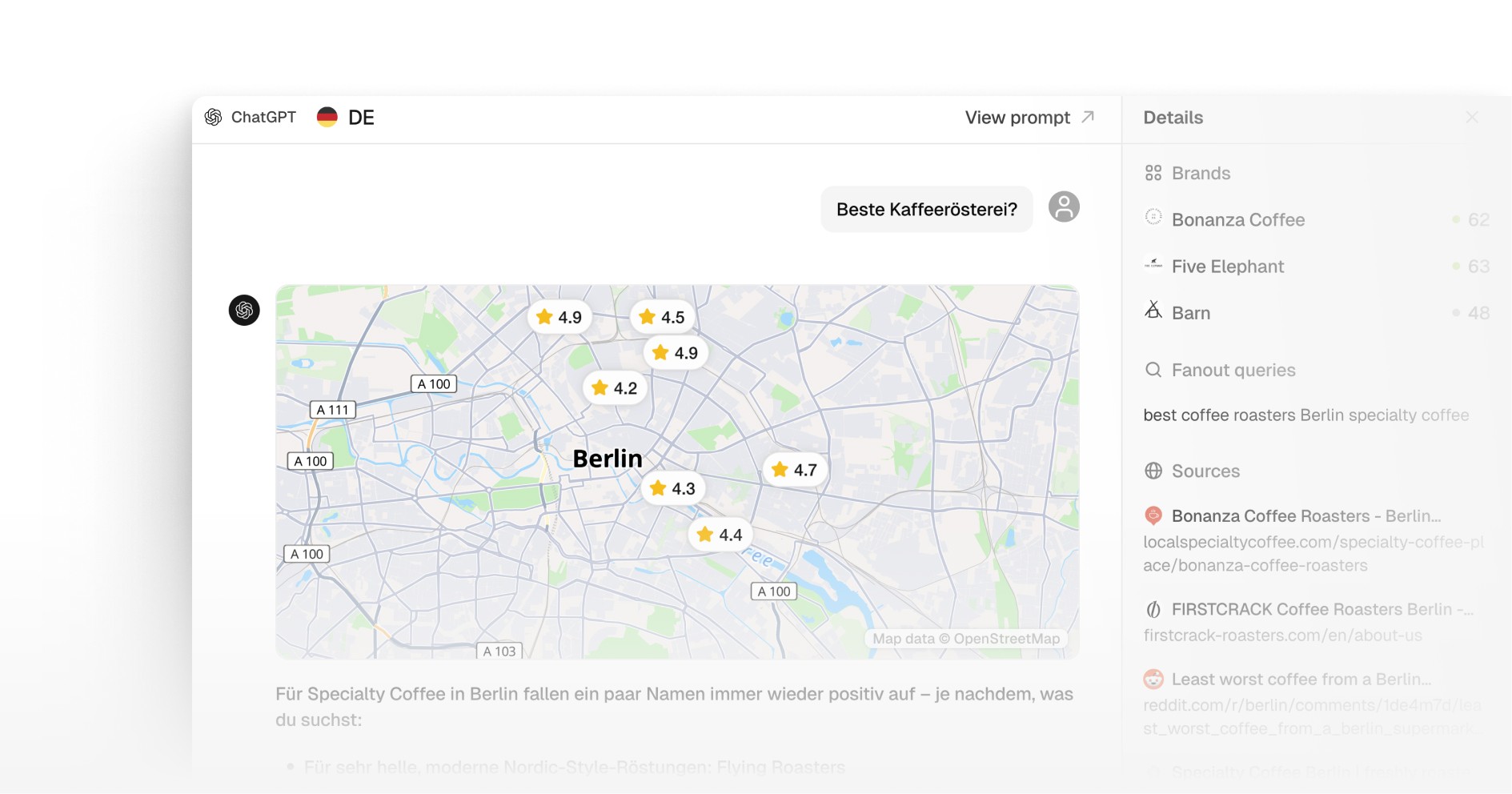
When ChatGPT responds with local businesses, Peec now renders them on an interactive map directly inside the chat view. Each pin is hoverable so you can see the business detail. If you are tracking local visibility or city-level recommendations, you finally see the answer the way the user sees it, not as a flat list of names.
We also started parsing and rendering the ads that appear inside ChatGPT chats, with a clear "ads" tag so you can spot at a glance which chats contain advertising. It is a first step toward understanding paid presence in AI answers, alongside the organic mentions you already track.
MCP, now at bulk scale
You can now bulk create, update, and delete Brands, Prompts, Tags, and Topics through the Peec AI MCP, up to 50 at a time. Brand profile is now readable and writable, results are sortable, and URL-level opportunities and gap analysis are available directly through MCP and the Customer API. List endpoints return prompt volume and total counts so you can prioritize the work that actually matters. The same workflows you would run by hand, scripted at scale from Claude, Cursor, or any MCP client.
Early Access is now self-serve
A new Early Access section in your company settings lets you turn on beta features yourself, no need to ping us. Two features are live there today.
Synthetic Query Fanout predicts the follow-up queries an AI engine is likely to generate from a user's original search, so you can see how those branches play out for your brand. ChatGPT only today, more engines coming.
Brand Insights breaks down visibility, share of voice, position, sentiment, and rankings across AI models, topics, tags, and brands in a single view. Useful when you want to slice the same competitive question several ways without rebuilding charts.
Smarter prompt suggestions
Suggested prompts now factor in search volume and topic relevance, not just topic match. Higher-volume prompts and prompts closer to your topics surface first, so the suggestions you see are the ones most worth tracking. Less noise during setup, fewer low-value prompts to skip past.
Apr 27, 2026
Agent Analytics
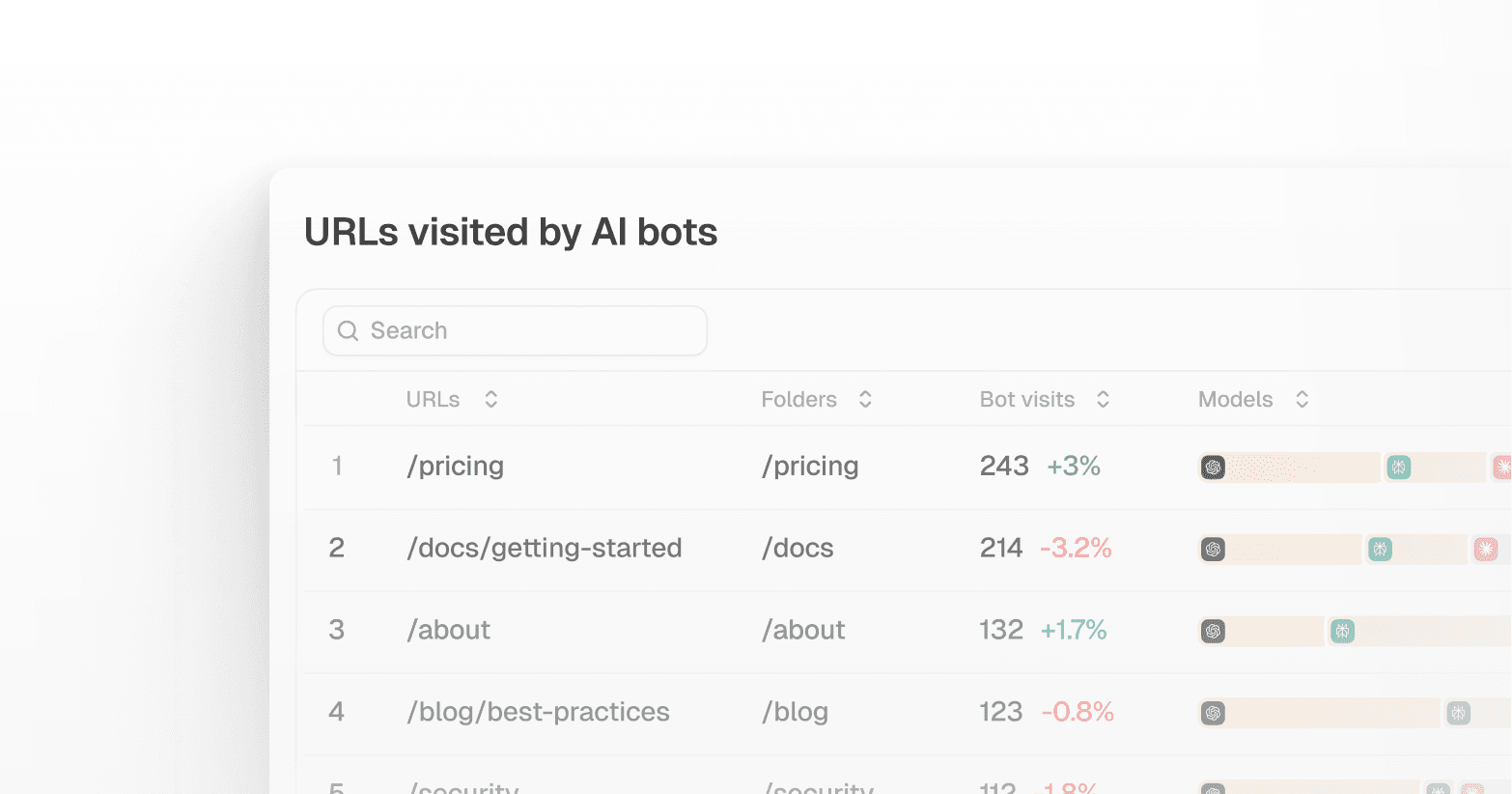
Most AI visibility data tells you whether your brand appears in AI responses. Agent Analytics goes one layer deeper: it shows you what AI crawlers are actually doing on your site, which pages they visit, how often, and whether they can access them at all. Built on your own server log data, it gives a direct and objective view of how AI bots interact with your content. That helps you catch technical access issues before they affect your visibility and understand which pages AI models are most interested in.
At launch, Agent Analytics includes two tools: Crawl Insights and Crawlability. Log ingestion connects via Cloudflare Workers or CSV/CLF file upload. Support for additional hosting providers is on the roadmap.
Crawl Insights
Connect your server logs and see which AI bots visit your site, which pages they hit, how often, and with what result. The overview shows aggregate trends across bots, status codes, and traffic volume. The details view lets you drill into specific pages, filter by bot type or time range, and see how retrieval data from your tracked prompts sits alongside your actual crawl activity. That combination is directional and useful for finding where to investigate, not a direct cause-and-effect relationship.
Crawlability
Check which AI bots are allowed or blocked by any domain's robots.txt instantly, without needing server access. You can also test individual URLs against the current rules to catch accidental blocks before they affect how AI models reach your content.
Apr 20, 2026
Peec AI MCP Server
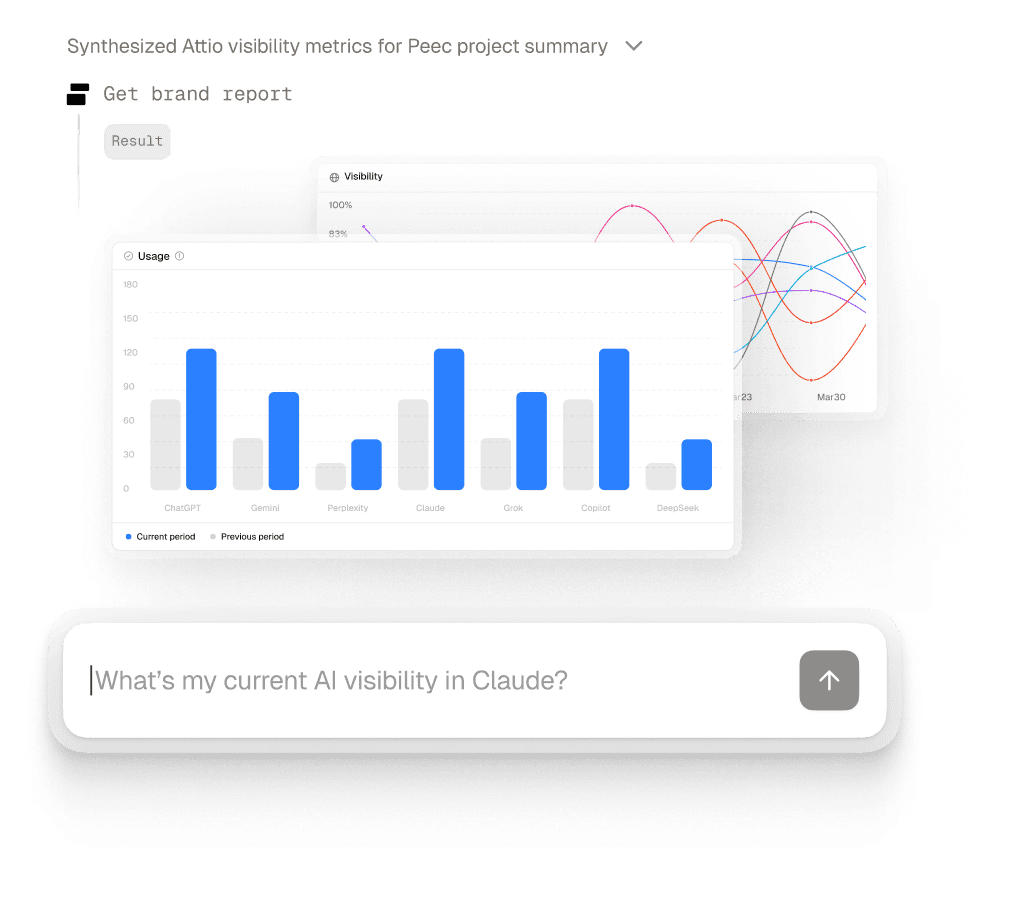
You can now use your Peec AI data directly inside the AI tools you already work in with the new Peec AI MCP. Ask Claude, Cursor, VS Code, Windsurf, and other MCP-compatible tools questions about your visibility, competitors, sources, prompts, and trends using your real Peec project data.
This makes Peec AI more than a dashboard. Instead of switching between tools, exporting reports, or pulling screenshots by hand, you can get answers where the work is already happening. That makes it easier to build reporting workflows, run competitive analysis, and turn AI visibility data into action faster. To make setup easier, you can now find Peec AI MCP directly in partner connector directories (Anthropic & Cursor) and connect with a single click.
More of your data is now available inside MCP
The MCP server now gives you deeper context when you ask questions. You can pull source URL content for analysis, see YouTube channel names and Reddit community names in source reports, access Peec AI recommendations directly through MCP, and inspect available AI models without guessing valid model IDs.
MCP now supports more complete workflows
You can now go beyond read-only analysis. We shipped native prompt workflows for faster repeated tasks, added write tools so you can create, update, and delete key Peec AI entities from MCP clients, and improved the server instructions so AI tools are better at choosing workflows and recovering from errors on their own.