How to get cited by ChatGPT (based on a ChatGPT leak)

GEO / AI Search optimization
Most advice on AI search is guesswork. People test a prompt, see an answer, and work backwards to a theory. I wanted to see the real mechanics instead.
Peec AI had access to a ChatGPT leak that made it possible. It shows what happens behind a ChatGPT answer: the system prompt the model runs on, the searches it sends, every page it retrieves, the scores each page gets, and the exact text that reaches the model. My team at Peec AI and I went through it piece by piece.
Then I went a step further. I wrote my own parsers to extract the main content, pulled the real HTML of the pages ChatGPT read, and checked where every selected fragment came from.
Some of what I found confirms what SEOs already suspected, and some doesn’t. Domain authority and freshness matter, for instance, but mostly when the search asks for it. And a page ChatGPT never cites can still decide which brand it recommends first. This is much different from traditional SEO.
In this article, I’ll cover:
- How ChatGPT goes from your prompt to an answer, step by step
- Why the model won’t recommend a brand it doesn’t know, and what decides the order for brands it does
- What makes a page get cited
- Which part of your page ChatGPT puts in front of the model
- What to change on your pages, starting Monday
A fair warning before we start
I did my best to verify every claim in this article. Where the leak showed a pattern, I tested it, and where I couldn’t test something, I say so.
But treat this as an attempt to understand ChatGPT as fully as possible, not as a final rulebook.
Four things make it hard to be definitive:
- The prompt-to-answer pipeline is extremely detailed. Dozens of steps, scores, and rules sit between a prompt and an answer. I’ve focused on mapping the ones that matter most.
- The output is probabilistic. Even one user asking the same question twice gets a different answer. That’s why I report results across many answers rather than single examples.
- ChatGPT runs multiple A/B tests at a time. The way the platform runs isn’t the same for every user. Two people asking the same question at the same time may hit different versions of the system.
- New models keep coming. Some of my findings have already changed between GPT-5.6 and GPT-6. They’ll certainly change again as ChatGPT gets better.
While most of the details have been verified based on access to the ChatGPT leak, some things here can’t be fully checked, and some will inevitably change as OpenAI adjusts its models. If you test something and see a different result, I want to hear about it.
ChatGPT ranking factors: the scores in the leak
ChatGPT finds pages, but it judges them by their best chunk.
The leak shows every score ChatGPT attaches to a search result. I checked all of them for 718 conversations with search on GPT-5.6, from September 2026, and 147 on GPT-6, from October 2026.
Before the scores, here are four terms you need to know:
- Fan-out queries are the additional queries ChatGPT creates to search the web. These are not the same as the user’s original prompt, and use words like “best,” “official,” or a year number to find answers to the user’s question.
- Keyword match (BM25) checks whether your words match the words in a fan-out query. Take the example of “best restaurants Chiang Mai 2026 local food.” A chunk saying “The best local food in Chiang Mai: 12 restaurants to try in 2026” shares six words with it and scores high. A chunk saying “Amazing places to eat in town, from street stalls to fine dining” doesn’t share any, and scores near zero, even though it might be a good answer.
- Meaning match (embeddings) fixes the problem with BM25. It turns text into numbers that encode meaning, so the second chunk scores as a close match despite sharing no words.
- The reranker is a small model that reads the fan-out and each chunk together and judges how well the chunk really answers it. It’s more expensive, so it runs last, only on the pages that made it through the first two checks.
Here are the scores that matter:
| Score in the leak | What it measures | Applied to |
|---|---|---|
| bm25 | Keyword match with the fan-out | The page |
| ann | Meaning match with the fan-out, from vector search | The page |
| retrieval_score | The sum of bm25, ann, and four small bonuses. Decides which pages enter the pool | The page |
| sonic-emb-cotrain-ev3 | Meaning match between the fan-out and a passage of up to about 2,000 tokens. One of the reranker’s inputs | A passage |
| sonic-re-fh-chunk-ev3-sx4 | The reranker: how well a chunk answers the fan-out | A chunk of about 1,000 characters |
| @rrf | The page’s final score, calculated directly from its best chunk’s reranker score | The page |
| minhash_dedup | How much a chunk duplicates other results | A chunk |
The reranker score of your best chunk is the one that weighs most. It sets the page’s final score, and about 14 pages with the highest final scores make it into the model’s prompt. One strong chunk can carry a whole page, and a page without one doesn’t reach the model at all.
Duplication works as a penalty, but ultimately it won’t block strong content. At the same reranker score, chunks that duplicate other results reach the model less often, but the strongest ones still get in.
Four more scores barely move anything:
- recency is the same for every web page, so it can’t separate them.
- domains applies to only 3% of results, when the fan-out asks for a specific site.
- required_phrases applies to under 1%, when the fan-out has a phrase in quotes.
- log_in_search_result is too small to change anything.

How ChatGPT works, step by step
Based on the ChatGPT leak, my colleagues and I were able to reverse-engineer ChatGPT’s pipeline:

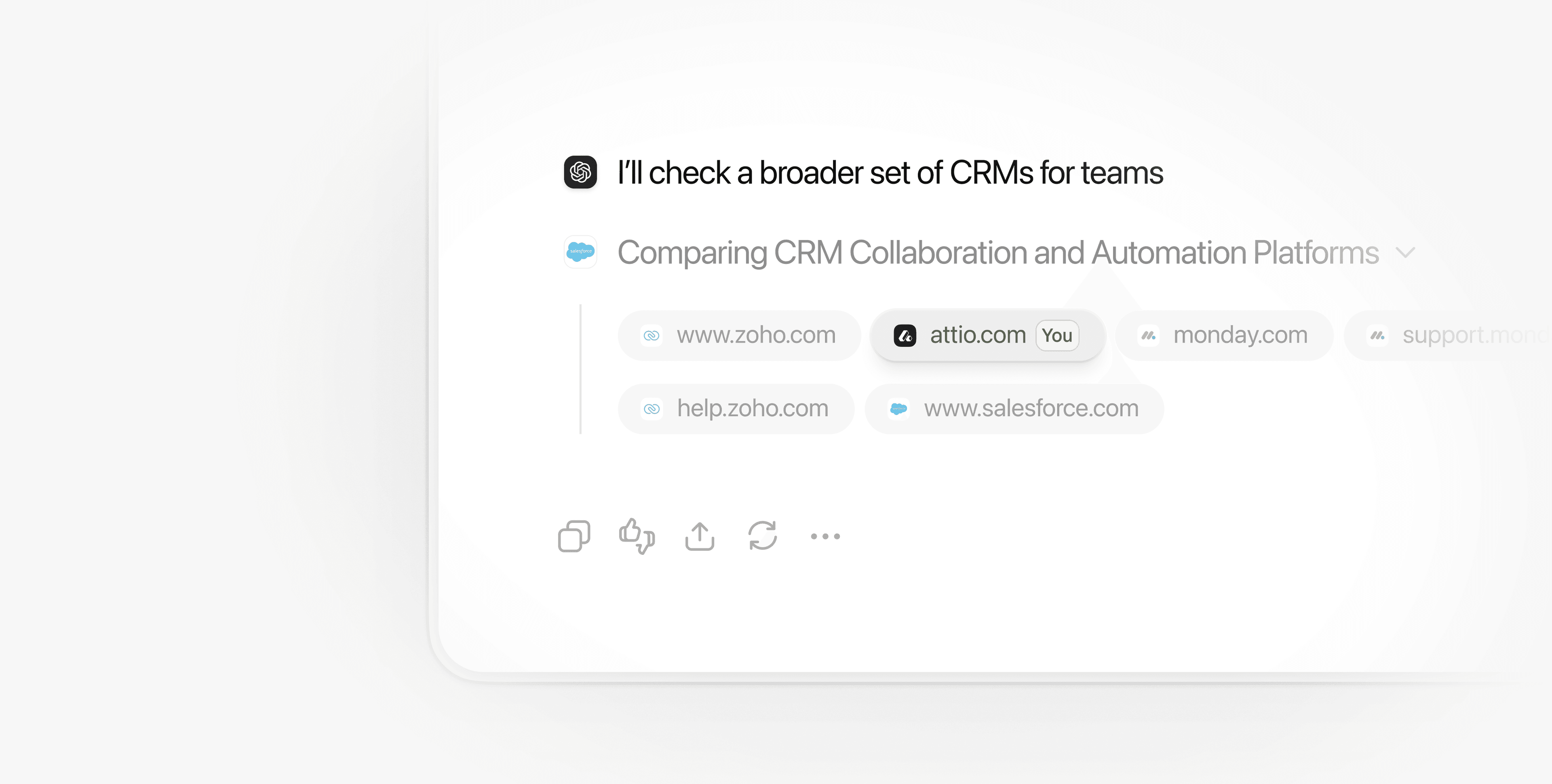
Stage 1: Fan-out queries. ChatGPT almost never searches for the user’s question. It first writes its own searches, called fan-out queries, and every later stage matches your page against those, not against what the user typed. On GPT-6, a question usually turns into one or two fan-outs, often with brand names and the current year added. More on how to optimize for them later in this guide.
Stage 2: Finding relevant pages. For every fan-out query, ChatGPT’s own index returns up to 12 pages. Their retrieval_score is a simple sum: keyword match plus meaning match, plus the fixed bonuses above. Keyword match works like a filter. In Peec’s data, fewer than 1% of the pages that got through had no keyword match with the fan-out. Once ChatGPT has its list of sources, meaning match does most of the sorting.
Stage 3: Scoring sections. Each page is split into passages, usually just one, and each passage gets an embedding score that evaluates how close it is in meaning to the fan-out query.
Stage 4: The model writes the answer. The model gets the winning pieces, each under a short header with the page’s title, site, URL, and dates. Then it writes the answer and decides what to cite and recommend, usually citing a few of the pages. It’s the model’s own judgment, based on:
- What the model already knows, which decides which brands it’s willing to recommend.
- Consensus between online sources, which decides whether a page’s claims are trusted.
- The source’s domain, which shifts which pages get cited when several could answer.
- The title and dates in the header, which shape how the model reads each piece.
Each stage in ChatGPT’s pipeline ranks smaller and smaller units of content, from pages to sections to pieces. What the model then does with those pieces comes after the ranking.
So what does that mean? Being found by ChatGPT’s retrieval system isn’t the same as being read by the GPT model, and being read doesn’t guarantee being cited. Your page has to match the fan-out query’s words to get included. The right section has to match its meaning, and the right piece has to win the reranker. That just gets you into the results the LLM looks at. Then the model has to trust what that piece says.
Optimize for fan-out queries, not user searches
When a customer asks ChatGPT a question, it doesn’t search for just their question. It writes its own searches first. So if you want to be found, you have to optimize for these fan-out searches.
These background searches are called fan-out queries. In the leak, they’re fully visible: you can see every fan-out ChatGPT sent and every page each query returned.
I looked at 718 conversations with search on GPT-5.6, from September 2026, and 147 on GPT-6, from October 2026.
Take this prompt as an example: “What is the best budgeting software for finance teams?” GPT-5.6 turned it into five searches:
- workday adaptive planning budgeting forecasting official
- anaplan financial planning budgeting official
- pigment budgeting forecasting finance teams official
- cube fp&a budgeting forecasting official
- best budgeting forecasting software finance teams fp&a 2026 pigment anaplan workday adaptive planning cube official
Not one of these, you’ll note, is the user’s question. That makes fan-out queries the real prompts used in ChatGPT searches.
What fan-outs look like:
- They almost never copy the prompt. Only 1 of 2,339 fan-outs on GPT-5.6 was identical to the user’s question, and none were on GPT-6.
- They prefer adding the year instead of words like “latest.” On GPT-6, 80% of searches included the current year even though the user never typed it. On GPT-5.6, it was 37%. Words like “latest” or “newest” almost never appear.
- They name brands the model already knows. Around a quarter of fan-outs are a brand name plus “official”: 30% on GPT-5.6, 24% on GPT-6. The model decides which brands to check before it reads anything.
How to use these findings:
- Look at real fan-out queries, not just prompts. In Peec AI, you can see the fan-outs ChatGPT sent for the prompts you track. That’s your real keyword list that you should be writing content against.
- Use the fan-out’s words on your page, especially the specific ones: the category, the use case, the feature. Put them in the title and the opening, where these words count most.
- Optimize for patterns. Fan-outs change from chat to chat. You don’t need to worry about covering every exact search if you make sure to cover the recurring terms.
- Keep the year current where it’s true. ChatGPT adds it to many GPT-6 searches.
- Make your official pages easy to match. When ChatGPT searches “[your brand] official,” your own site should clearly state what you do, for whom, and at what price.
In AI search, consensus wins
When your page contradicts what every other source says, ChatGPT mostly stops citing it, even if your page is right.
To test this, using ChatGPT’s system prompt and scoring from the ChatGPT leak, I replayed real ChatGPT conversations and changed one fact on one retrieved page at a time, collecting 40 to 60 answers per variant. Here’s what happened to the page’s citations:
| What the page got wrong | Citations |
|---|---|
| Got the brand’s positioning wrong, e.g., called the budget option “enterprise” | 44% to 95% drop |
| Gave a wrong price for a brand known for its low price | 100% drop |
| Gave a wrong price for a brand not known for its price | No drop |
| Argued its own contrarian verdict, with good reasoning | 44% to 77% drop |
Positioning is the costliest mistake: it held across three runs and two brands. Other facts matter only when they’re what the brand is known for. A wrong price wiped out the page for the budget option and changed nothing for a brand whose positioning has nothing to do with price.
That’s because ChatGPT reads several pages at once and cross-checks them. A page that disagrees with the rest looks unreliable, so the model leaves it out. In AI search, agreement is what gets you cited.

How to use these findings:
- Before publishing, check what the rest of the web says. Look at how the top sources describe the brands in your space: who is the budget option, who is enterprise, who each brand is best for. If you use Peec AI, you can use the Peec Agent to analyze your content via the consensus skill. Just ask a Peec Agent if your content contradicts other sources. It will look for any instances when your content breaks the consensus of other sources and will flag it.
- Match the consensus on positioning and pricing. These are the facts the model checks most rigorously.
- Fix wrong facts about your own brand at the source. If third-party pages describe you wrongly, your correct page loses to theirs. Correcting those pages helps you more than arguing on your own.
- Don’t publish a contrarian take hoping to stand out. If you disagree with the consensus, expect to be cited less.
Domain authority matters, even without a score
In my experiments with ChatGPT’s system prompt, I replayed real GPT-6 conversations and changed only the domain name of one page. The text, its position, and the other pages stayed the same. Under the Search Engine Land domain, the page was cited in 20 of 20 answers. Under a Blogspot address, it was cited in 0 of 20.
ChatGPT has no domain authority score in the leak. Its system prompt does say: “Prefer high-authority, highly relevant, and fresher sources if available.” But that line isn’t what drives this effect. When I deleted the system prompt, nothing changed. The preference lives in the model itself, which has learned which sites look trustworthy.
A second test confirmed it. I wrote 10 pages about made-up electric cars and showed each one under every domain equally often. The same pages were cited 54% of the time on publishers like Edmunds, and 42% on Reddit, Quora, Medium, or Blogspot.
But content still won. A page with exactly the fact the question needed got cited almost every time, even on Blogspot. An off-topic page almost never got cited, even on Edmunds. The domain only decides the close calls.
What about Reddit? ChatGPT’s system prompt tells it to draw heavily on Reddit when users ask for reviews, recommendations, or community opinions, and it lets the model quote Reddit at length. So Reddit matters for opinion questions. As a source of facts about your brand, though, the same content gets cited less there than on a trusted publication’s site.

ChatGPT is looking at domain authority differently than SEOs used to think about it. ChatGPT does not “read” third-party SEO scores like Moz’s Domain Authority (DA) or Ahrefs’ Domain Rating (DR). It prefers a result from the LLM training process, not external scores.
How to use these findings:
- First make your content particular and exact. A page with a relevant, narrow fact will outperform a strong domain with a generic page.
- Get your key facts onto sites the model trusts. Industry publications and known media carry more weight than free platforms.
- Diversify your sources. A fact that lives in one place looks like an outlier, while a fact repeated across independent sources becomes the consensus. Your own website alone isn’t enough, and neither is Reddit alone. Get the same key facts onto your site, industry publications, review sites, and communities, and keep them consistent.
Freshness depends on the search
Most people treat freshness as a switch: fresh wins, old loses. The data shows it’s more of a spectrum, and what users search for adjusts that dial.
On evergreen questions, old hurts and new doesn’t help. At the time of search, for “evergreen” queries, ChatGPT gives every web page the same recency value, and pages up to a year old get in as often as fresh ones. A stale year in the title did hurt: those pages got into results 12% of the time, against 31%.
In the answer, the model reads the publication date. I changed only that date on one page:
| Published date shown to the model | Citation frequency |
|---|---|
| No date | 52% |
| “5 days ago” | 45% |
| “2 years ago” | 22% |
| Date in the future | 0% |
Freshness wins out when the search requires it
When the search asks for recency, freshness (of course) wins. When the user asked for the “latest” options, a 5-month-old page dropped from 26 to 9 citations, and a 5-day-old page rose from 16 to 37. ChatGPT also makes searches time-sensitive through the fan-out queries it runs: on GPT-6, 80% of these queries included the current year, even when the user didn’t type it.
The leak shows ChatGPT’s system prompt contains today’s date, and this instruction:
For time-sensitive answers, cite a source with an explicit recent publication date that matches the user-requested time window.
The model compares every date against today. It particularly rewards recency when the question calls for it.
How to use these findings:
- Update evergreen pages at least once a year, and more often where searchers are likely to be asking for the newest options or latest opinions.
- Use your real update date, and never one in the future. Don’t use “Q4 2026” or the current month as a dateline.
- Refresh numbers when you refresh labels. Old statistics lose even under a fresh date.
- Remove old years from titles, and use the current year where the content is really current.
Compete in both the model’s memory and its online sources
To be recommended by ChatGPT, you need two things. The model has to know your brand from its training, and the pages it reads have to back you up. Neither is enough on its own:
- Sources without memory: if the model doesn’t know you, the pages can’t get you into the answer, however many there are.
- Memory alone: the model may know you, but the pages decide where you land.
- Both together: when the model knows you and the pages give it facts that fit the question, you can take first place.
To test this, I replayed real ChatGPT conversations from the leak, using ChatGPT’s system prompt and the pages it had found. Then I changed only what those pages said about one brand and had the model answer again, 20 times per variant.
1. Sources without memory: pages can’t get you in
I made up a brand, Veridexa, so I could be sure the model had never heard of it. Then I added it to my copies of the pages, step by step: first one sentence on one page, then a full entry with price, best-for, pros and cons, and finally the same full entry on all 9 pages, including first place in a comparison table.
The model recommended Veridexa in none of its 240 answers.
It did read the pages. When I asked directly, “How much does Veridexa cost and who is it for?” 5 of 5 answers gave the price and audience straight from the pages. It just wouldn’t recommend a brand it had never heard of.
ChatGPT’s leaked system prompt explains why. It never tells the model to answer only from the sources. When I added that one instruction, Veridexa was recommended in 20 of 20 answers. Without it, the answer is the model’s own, and the model recommends what it knows.
This experiment shows that inclusion in LLM training data is crucial for being recommended by the model.

2. Online sources can change the winner
Without search results, the model named its favorite tool first in 90% of the answers to the first question. With the real search results, a different tool took first place in 75% of the answers, depending on the run. Memory sets the default, and the online sources override it.
One sentence can be enough. I changed only the opening sentence of one comparison page, the sentence that says which tool is best for what. Whichever brand it named first became the top pick in 119 of 120 answers.
Real ChatGPT answers from the leak show the same effect. When a brand’s own page was among the sources, the brand was named first 30% of the time. Without that page, it was named first only 8% of the time.
3. Memory and sources together: facts lift a known brand
For this test, I picked a real tool that the model knows but doesn’t name on its own. Here’s how often the model named it, depending on what the pages said:
| What the pages said about the brand | Brand named in |
|---|---|
| Plain praise, such as “we also recommend [brand]” | 0% of answers |
| A full entry describing what the product does | 35% of answers |
| A verifiable claim, such as which AI engines it tracks | 43% of answers, up from 18% in a separate test |
| A role that matches the question, such as “Perplexity specialist” on the Perplexity question | 100% of answers, always in first place |
Style matters too. When I wrapped the same facts in a first-person anecdote (“I tried it last month and…”), the brand was named in 10% of answers, down from 40%. The model rewards facts and fit, not storytelling or personal experience.
Training data gets you onto the model’s shortlist. Online sources then decide where you land, based on facts and fit to the question.
How to use these findings:
- Build your brand’s presence where models learn. Get mentioned in the places that feed training data, so the model knows you exist. One of the sources used for training is Common Crawl.
- Give the pages facts: what you do, which use cases you cover, and what your products or services cost.
- Stake a claim to a role or niche. Make it clear which question you’re the answer to, such as “best for agencies” or “Perplexity specialist.”
- Stick to facts instead of stories. A neutral description works better than both praise and a personal anecdote.
ChatGPT prefers the top of your page
When ChatGPT searches the web, it cuts each page into pieces of about 1,000 characters. Then it picks the piece it considers most useful and passes it to the model. That piece almost always comes from the top of the page.
To check this, I looked at real ChatGPT conversations from the leak: 1,640 pages that the latest model, GPT-6, used in October 2026. For each page, I found the piece of the page ChatGPT cited and where it sits on the page. Then I compared it with the real HTML of those same pages.
Here’s what the data shows:
- In 92% of cases, the selected piece starts in the first 10% of the page. If ChatGPT picked a piece at random, you wouldn’t expect the frequency to be close to 100%.
- The top of the page gets a scoring bonus. Usually it wins because it answers the question best. But even when a later piece matched the question better, ChatGPT still picked the first one 56% of the time.
- Preference for the top of the page got stronger with GPT-6. With the previous model, the first piece was selected 75% of the time. With GPT-6, that happens 92% of the time.

How to use these findings:
- Put answers in the first 1,000 characters. Anticipate likely questions about your brand and products, like what it is, who it’s for, and any key facts and numbers.
- Cut the warm-up. A long intro or a story pushes content that answers user prompts out of the piece ChatGPT is most likely to select.
- On long pages, open every section with the words people search for. Each section is evaluated as an independent chunk.
Optimize for the way ChatGPT ranks YouTube videos
ChatGPT scores YouTube videos a little differently from web pages. On top of the usual relevance scores, videos get extra signals for popularity: how many views the video has, how many subscribers the channel has, and whether the channel is verified. But these are only a bonus. On average, popularity makes up about 10% of a YouTube video’s score. The other 90% comes from relevance: how well the video matches the fan-out query. So what decides most of a video’s chances of being cited in ChatGPT is the text it reads when it makes that match.
The leak shows what that text is: the video’s title and its description. ChatGPT doesn’t watch the video or listen to it. If something is only said in the video, ChatGPT can’t see it.
That matters because most descriptions are nearly empty. YouTube allows up to 5,000 characters, yet many channels use only a line or two and a few links. From ChatGPT’s point of view, those videos are nearly blank.
That gave us a clear prediction: if AI models like ChatGPT read the description, a better description should make a video easier to find. So we rewrote the descriptions of some of our own videos, without touching the videos themselves, and the effect was very positive. Daily AI retrievals of those videos grew by 359%, against 25% for YouTube overall. My colleague David Konitzny describes the full test in his post.
The result is exactly what the leak predicts. The description is one of the only things a model reads from a video, and when it gets more relevant context there, it retrieves the video far more often. That doesn’t mean longer is always better: filling all 5,000 characters with filler content doesn’t provide the useful context the model wants.
How to use these findings:
- Don’t leave YouTube descriptions empty. For ChatGPT, the title and description are most of what your video is.
- Revisit the descriptions of videos you already have. In our test, rewriting them was the only change, and no reshooting was needed.
- Get a new channel past 1,000 subscribers. It’s one of the two biggest popularity bonuses, and the easiest of the two to reach.
- Get your channel verified. This is a quick and simple way to earn a bonus.
- Don’t chase popularity at the expense of relevance. Popularity is about 10% of the score. A well-described video on the right topic beats a popular one that doesn’t match the search.
ChatGPT has its own search index
For years, SEOs assumed ChatGPT only retrieved results through Bing and Google. But ChatGPT runs its own family of indexes, called Labrador, with separate indexes for the web, PDFs, YouTube, news, shopping, and more. It also caches pages instead of fetching them live, and still pulls from outside providers like Google, Microsoft’s Web IQ, Yelp, and Tripadvisor. I covered the evidence in detail in ChatGPT built its own search index.
The October data in this guide confirms it: every one of the 2,604 web results GPT-6 received came from Labrador. Everything in this guide, from fan-outs to chunks to the top of your page, runs on that index.
How to use these findings:
- Don’t treat Bing or Google visibility as a proxy for ChatGPT. Being indexed there helps, but ChatGPT ranks pages with its own stack.
- Make sure ChatGPT can crawl you. Blocking its crawler or serving slow, broken pages keeps you out of its index.
- Check what ChatGPT has cached. Lockdown mode, which can’t browse live, shows whether your key pages are in its cache.
Where to go from here
Expect more changes to ChatGPT and the other AI platforms in the future. Companies are innovating rapidly in the space, which leads to frequent changes in their products. For more intelligence on how to best optimize your brand’s content for AI search, be sure to follow the Peec AI blog.